Contents
- What is IT monitoring and what is it used for
- Types of IT Monitoring and Why They Matter
- How IT Monitoring Works in Practice
- Key Benefits and Corporate Responsibilities
- Risks, Costs, and Comparison with Alternatives
Key points
| Point | Details |
|---|---|
| IT monitoring enables proactive system management | It enables the rapid detection of problems and optimization of resources in the IT infrastructure. |
| Different types of monitoring are crucial for business | It includes infrastructure, applications, network, and security for comprehensive monitoring. |
| Monitoring automation reduces risks and costs | Implementing automated systems enables faster responses to issues and reduces operational costs. |
| Clear strategies are necessary for successful implementation | Companies must establish defined KPI indicators and regularly review them. |
What is IT Monitoring and What Is It For?
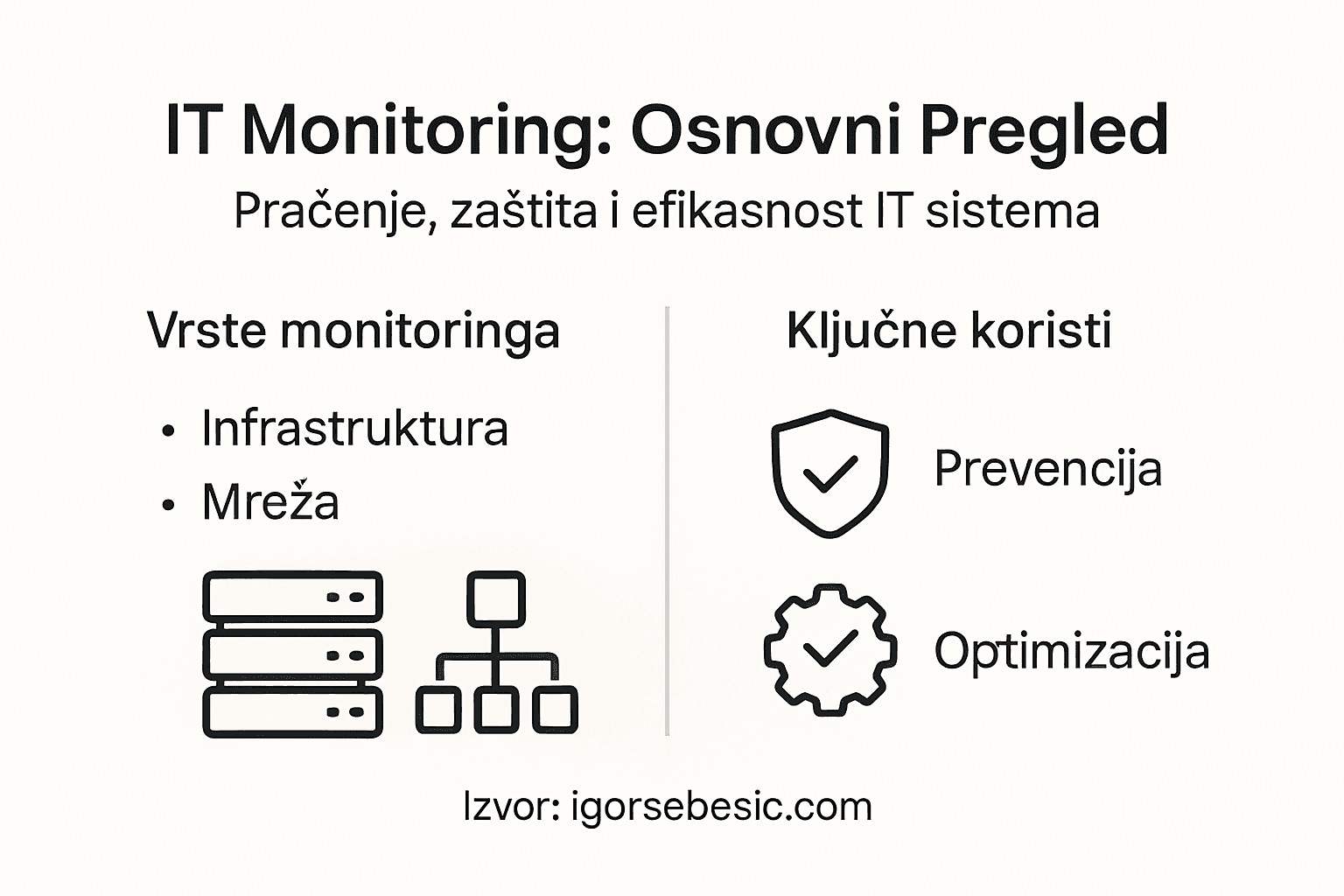
IT monitoring is a systematic approach to monitoring and analyzing the performance of a company's entire IT infrastructure, enabling managers to quickly detect and resolve potential problems. The primary goal of IT monitoring is to track digital systems in real time, collect critical metrics, and ensure the continuous operation of complex technical ecosystems. This process involves constant observation:- Network devices and servers
- Software applications
- System performance
- Security parameters
- Bandwidth and data throughput
 Pro-tip:
Implement an automated monitoring system that provides a complete, real-time overview of your IT infrastructure and enables rapid troubleshooting.
Pro-tip:
Implement an automated monitoring system that provides a complete, real-time overview of your IT infrastructure and enables rapid troubleshooting.
Types of IT Monitoring and Why They Matter
IT monitoring encompasses several key types that cover different aspects of a company's digital systems and infrastructure. These five main monitoring strategies enable comprehensive protection and optimization of technical resources. The fundamental types of IT monitoring include:- Infrastructure Monitoring: Monitoring hardware components
- Application Monitoring: Monitoring the performance of software solutions
- Network Monitoring: Controlling network traffic and utilization
- Security Monitoring: Protection against potential threats
- User Experience Monitoring: Analysis of end-user satisfaction
| Type of Monitoring | Monitoring Focus | Business Impact |
|---|---|---|
| Infrastructure | Hardware (servers, equipment) | Stability of core resources |
| Application | Software and applications | Optimal product performance |
| Network | Data throughput and security | Service Interruption Prevention |
| Security | Threat Detection | Confidential Data Protection |
| User experience | Customer satisfaction | Increased competitiveness |
How IT Monitoring Works in Practice
IT monitoring is a complex process that requires precise technical mechanisms for the continuous monitoring of digital systems. Performance data collection is carried out through sophisticated sensors and network agents that constantly analyze every segment of the infrastructure. The basic steps of how IT monitoring works include:- Deploying monitoring agents on critical system resources
- Collection of quantitative metrics in real time
- Analysis of collected data using advanced algorithms
- Generating automatic alerts for detected anomalies
- Visualizing performance through dashboards
- CPU Utilization
- Memory load
- Network traffic
- Number of errors in system logs
- Application response time
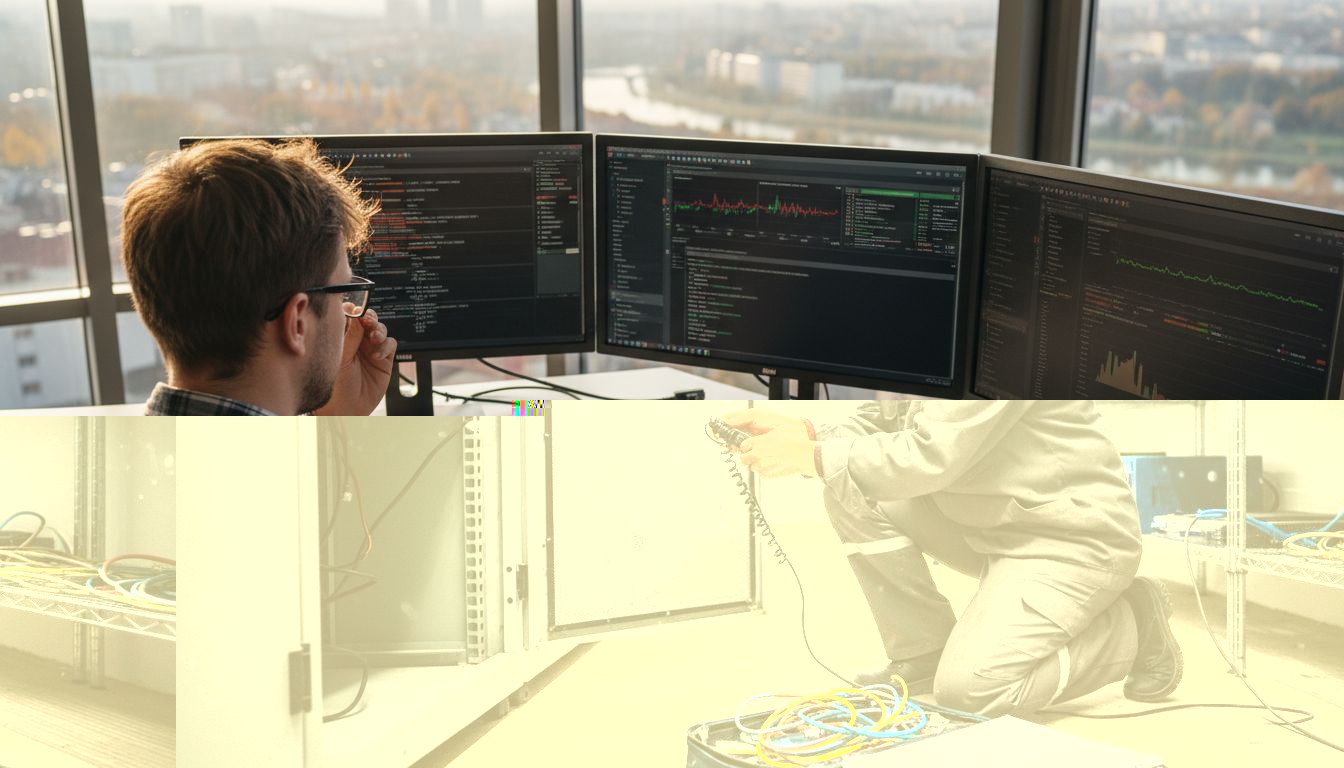 Modern monitoring systems offer advanced automated response capabilities, meaning they can automatically initiate remediation procedures for detected faults or send precise alerts to the IT administration before more serious consequences occur.
Pro-tip:
Regularly update your monitoring tools and set clear thresholds for automated alerts to prevent potential system outages.
Modern monitoring systems offer advanced automated response capabilities, meaning they can automatically initiate remediation procedures for detected faults or send precise alerts to the IT administration before more serious consequences occur.
Pro-tip:
Regularly update your monitoring tools and set clear thresholds for automated alerts to prevent potential system outages.
Key Benefits and Corporate Responsibilities
IT monitoring is a critical strategy for modern organizations striving for continuous improvement of their digital infrastructures. The key benefits of monitoring directly impact a company's operational efficiency and security. The fundamental benefits of IT monitoring include:- Increased Availability of IT Services
- Faster resolution of technical issues
- Optimization of system resources
- Enhancing security measures
- Reducing the risk of unplanned outages
- Defining clear system monitoring strategies
- Continuous training for the IT team
- Regularly updating monitoring tools
- Compliance with regulatory standards
- Implementation of proactive security measures
Risks, Costs, and Comparison with Alternatives
IT monitoring requires a strategic understanding of potential risks and financial implications for organizations. An analysis of alternative approaches reveals critical differences between proactive and reactive system management. Key risks of inadequate monitoring include:- Longer system outages
- Increased security breaches
- Loss of business data
- Decreased productivity
- Potential financial losses
- Reactive approach: Lower initial costs, but higher long-term risks
- Proactive Monitoring: Higher initial investment, significantly lower risks
- Manual management: High operational costs and instability
- Automated Monitoring: Optimal control and resource savings
- Hybrid Models: Flexibility and adaptability to specific needs
| Approach | Short-term investments | Long-term risks | Automatic problem detection |
|---|---|---|---|
| Reactive Monitoring | Lowest costs | High incidence rate | No automation |
| Proactive monitoring | Higher initial investments | Reduced risks | Rapid identification and response |
| Hybrid models | Medium costs | Adaptable risks | Combined Automation |
Protect your IT infrastructure with professional monitoring and support
Business efficiency and security depend on the timely detection of problems in your IT infrastructure. IT monitoring is crucial for tracking performance, preventing security risks, and maintaining system stability. If you want to protect your digital resources and prevent unplanned downtime with expert support backed by years of experience, our Networking and Antivirus services are the right solution for you. Don't wait for problems to threaten your business. Visit our website, Igorsebesic.com, and secure 24/7 professional IT support and monitoring. Our certified approach includes proactive monitoring, FortiGate configurations, emergency cybersecurity interventions, and a secure WordPress infrastructure. Contact us today and enhance the security and efficiency of your IT network.