Content
- What are fast websites and how do they work
- Key Differences Between Fast and Slow Websites
- The Impact of Site Speed on SEO and Conversions
- Security risks of a slow WordPress site
- How speed optimization protects your business
Key Takeaways
| Period | Details |
|---|---|
| Site Load Speed | Fast sites ensure loading in under 3 seconds, which is crucial for user retention. |
| Technical Optimization | This includes minimizing JavaScript and CSS, optimizing images, and using a CDN to improve performance. |
| Impact on SEO | Fast site load times increase search engine visibility, which directly impacts conversions. |
| Digital Security | Slow sites are more susceptible to attacks, requiring regular monitoring and updates for protection. |
What are fast websites and how do they work
Fast websites are technically optimized online presences that enable extremely fast content loading, providing users with instant access to information. Technical SEO optimization is a key element that defines the performance of modern websites. The fundamental principles of how fast sites operate encompass several critical technical components:- Minimizing the size of JavaScript and CSS files
- Image compression and optimization
- Using advanced caching mechanisms
- Implementing a Content Delivery Network (CDN) service
- Choosing a high-performance hosting provider
 For a better overview, here are the key factors that contribute to site speed and their impact on business:
| Website Speed Factor | Business Impact | Digital Advantage |
|---|---|---|
| Optimized code | Reduced maintenance costs | Greater site reliability and stability |
| Advanced caching mechanisms | Faster loading of products/services | More satisfied users |
| Quality hosting | Fewer technical outages | Winning visitor experience |
| CDN service | More globally accessible content | Expansion into new markets |
Key Differences Between Fast and Slow Sites
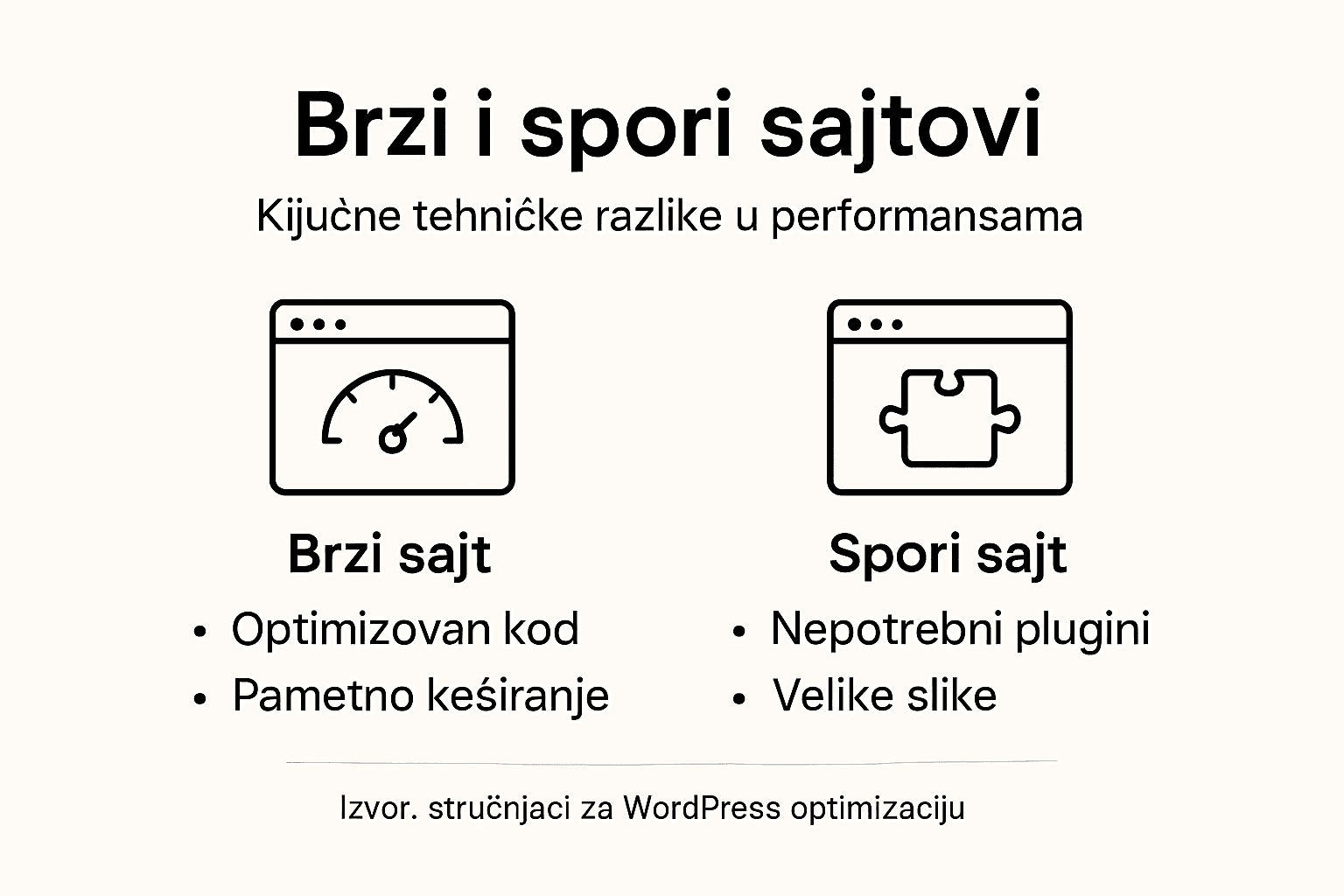
There is a fundamental difference between fast and slow sites that directly impacts user experience and business success. Fast sites are optimized web presentations that allow for instant content loading, while slow sites are characterized by slow and tedious navigation that repels visitors. Key differences between fast and slow sites include the following aspects:- Load time: Fast websites load in up to 3 seconds, while slow websites often take over 5 seconds
- User experience: Fast sites provide a smooth transition between pages, while slow sites cause frustration
- SEO performance: Fast sites rank better on search engines
- Conversions: Fast sites increase conversion rates, slow sites decrease them
 The crucial factor for success is the continuous monitoring and improvement of site performance. Slow sites not only repel users but also directly contribute to the loss of potential clients and a decrease in revenue.
Pro-tip:
Regularly use tools like Google PageSpeed Insights to measure and continuously improve your site's speed.
The crucial factor for success is the continuous monitoring and improvement of site performance. Slow sites not only repel users but also directly contribute to the loss of potential clients and a decrease in revenue.
Pro-tip:
Regularly use tools like Google PageSpeed Insights to measure and continuously improve your site's speed.
The Impact of Site Speed on SEO and Conversions
Site speed is a critical factor that directly impacts the digital success of any online presence. SEO performance and conversions are two key business aspects that depend on a website's loading speed. The most important elements influencing site speed include:- Reducing the bounce rate
- Increased visitor dwell time
- Better search engine rankings
- Improved user experience
- A higher likelihood of visitor conversions
| Site Speed | User retention | SEO Ranking | Conversion Rate |
|---|---|---|---|
| Under 3 seconds | Increased dwell time | Better Google ranking | Increase in successful transactions |
| Over 5 seconds | High bounce rate | Low SEO visibility | Significant drop in transactions |
Security risks due to a slow WordPress site
Slow WordPress sites pose a serious threat to the digital security and functionality of a website. Technically lagging sites become an ideal target for cyberattacks, leaving room for potential security breaches. Key security risks of slow WordPress sites include:- Increased vulnerability to hacking
- Outdated security updates
- Slower detection of security threats
- More complex system recovery
- Difficulty implementing monitoring procedures
How Speed Optimization Protects Your Business
Site speed optimization is a critical strategic element that directly protects and advances the business interests of any digital organization. Digital efficiency is becoming a key factor in competitiveness in the modern business environment. The most important aspects of protecting your business through speed optimization include:- Reducing revenue loss due to technical downtime
- Increasing user trust
- Preventing the loss of potential customers
- Improving overall digital reputation
- Reducing operational risks
Speed up your WordPress site and attract more clients
Slow websites often repel visitors who don't have the patience to wait more than a few seconds. If you want to improve the user experience and achieve better rankings on Google, you must focus on optimizing load speed. Our website development service is specially tailored for companies that want to reduce their bounce rate and increase their conversion rate through fast, reliable, and secure WordPress sites. Don't let your digital presence suffer due to technical issues and slow infrastructure. Visit us at https://igorsebesic.com and find out how we can provide top-notch 24/7 technical support, site security, and complete optimization. Also, check out our website offerings and start earning more right away with a faster, more secure site.